
Blending Two Cultures in Marriage: A Practical Guide for Intercultural Couples
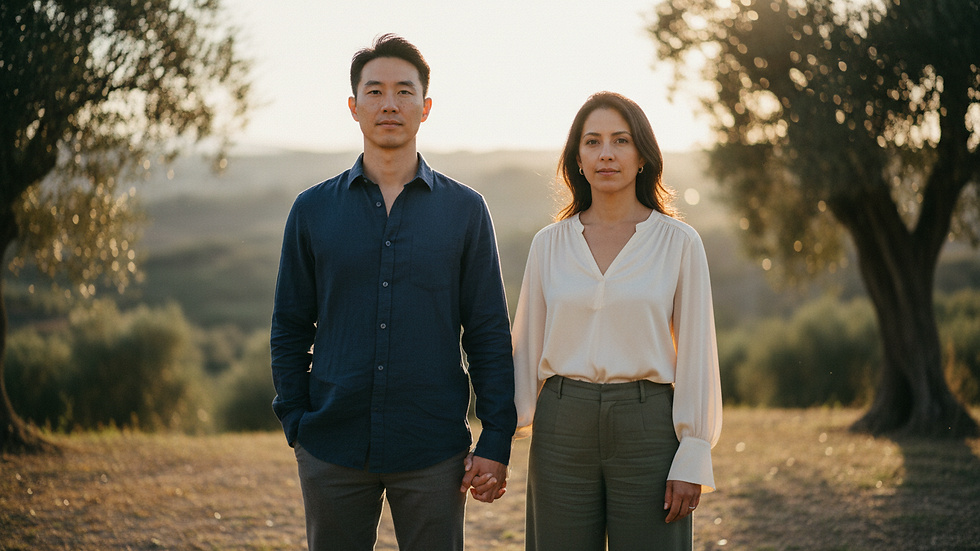
"We are not a melting pot, but a beautiful mosaic. Different people, different beliefs, different yearnings, different hopes, different dreams." — Jimmy Carter
Beyond Tolerance to True Blending
Many intercultural couples learn to tolerate each other's differences. They coexist. They accommodate. But that's not the same as blending.
True blending creates something new—a marriage culture that isn't simply "his" plus "hers" but a genuine integration that draws from both and creates something that belongs to neither individually but to both together.
Sharisse and I moved from tolerance to coexistence to genuine blending over many years. The marriage we have now is neither Puerto Rican nor British-American. It's something unique—a blend that couldn't exist without both of us but isn't simply the sum of our parts.
This guide explores how to achieve that kind of blending.
Understanding What Blending Means
What Blending Is
Integration, not addition:
Blending isn't putting two cultures side by side. It's weaving them together so they interpenetrate.
Creating something new:
Blended marriages develop practices, traditions, and ways of being that are uniquely theirs—drawn from both cultures but existing in neither.
Dynamic, not static:
Blending continues throughout marriage. It's not achieved once but developed over time.
What Blending Isn't
Erasure:
Blending doesn't eliminate either culture. Both remain present and valued.
Domination:
In true blending, neither culture wins. Both contribute.
Homogenization:
You're not trying to create sameness. You're creating unity from diversity.
The Blending Process
Phase 1: Deep Cultural Learning
Before you can blend, you must know what you're blending.
Learn your partner's culture deeply:
History and heritage
Values and beliefs
Traditions and practices
Communication patterns
Family structures
Food and celebration
Learn your own culture clearly:
What aspects do you carry?
What have you inherited from family?
What do you want to maintain?
What are you willing to adapt?
Share with each other:
Cultural show-and-tell
Stories from your heritage
Meaningful traditions
Childhood experiences
Phase 2: Identify What to Blend
Not everything needs blending. Some things remain separate; others come together.
Categories:
Keep separate:
Individual cultural practices that don't need integration. Partner A does this; Partner B does that.
Blend together:
Practices where integration creates something richer than separation.
Create new:
Areas where you'll build something that didn't exist in either culture.
Decide together:
Which areas fall into each category for your marriage.
Phase 3: Experiment with Blending
Blending requires experimentation. Some attempts work; others don't.
Try things:
Fusion meals that combine cuisines
Hybrid traditions that merge celebrations
New practices that draw from both backgrounds
Evaluate:
What felt right?
What worked practically?
What honored both cultures?
What felt forced or false?
Keep what works:
Successful experiments become your new traditions.
Phase 4: Establish Your Blended Culture
As successful experiments accumulate, you develop a distinct family culture.
Elements of your blended culture:
How you celebrate (hybrid traditions)
How you communicate (integrated styles)
How you eat (blended cuisines)
How you relate to family (negotiated expectations)
How you raise children (unified approach)
Document and name it:
"In our family, we..."
"Our tradition is..."
"The way we do it is..."
Blending Specific Areas
Food and Cuisine
Blending approaches:
Learn to cook each other's traditional dishes
Create fusion recipes combining both cuisines
Establish food traditions that include both cultures
Alternate whose cuisine is featured for celebrations
Practical tips:
Take cooking classes together
Ask family members for recipes
Experiment with fusion without needing perfection
Make food exploration fun, not obligatory
Celebrations and Holidays
Blending approaches:
Celebrate major holidays from both cultures
Create hybrid celebrations that merge traditions
Establish new family traditions unique to you
Alternate whose cultural calendar is primary if needed
Practical tips:
Create a cultural calendar showing both traditions
Decide how to handle overlapping holidays
Blend celebration elements creatively
Don't try to do everything—choose what matters most
Communication and Daily Life
Blending approaches:
Develop shared communication patterns that honor both styles
Use words and expressions from both languages
Create family rituals that draw from both backgrounds
Build daily practices that reflect blended values
Practical tips:
Learn at least basic phrases in each other's languages
Develop hybrid vocabulary for your family
Create consistent daily rhythms that work for both
Be explicit about expectations rather than assuming
Family and Relationships
Blending approaches:
Create agreed-upon approach to extended family
Blend family involvement expectations
Develop boundaries that respect both cultures
Build relationships with both sets of family
Practical tips:
Have explicit conversations about family expectations
Present united approach to extended family
Find ways to stay connected to both families
Navigate different family styles together
Parenting (If Applicable)
Blending approaches:
Develop unified parenting philosophy drawing from both cultures
Expose children to both heritages
Create blended family culture for your children
Teach children about both backgrounds
Practical tips:
Discuss parenting approaches before children arrive
Present united front to children
Ensure both cultures are present in children's lives
Help children embrace their dual heritage
Overcoming Blending Challenges
Challenge: One Culture Dominates
Signs:
Most traditions are from one culture
One language predominates
One partner always adapts
Solutions:
Honest assessment of current balance
Deliberate rebalancing efforts
Dominant-culture partner actively elevates the other culture
Ongoing attention to equity
Challenge: Family Resistance
Signs:
Extended family expects cultural conformity
Pressure to raise children in one culture
Criticism of blended practices
Solutions:
United front as couple
Clear boundaries with family
Education about your choices
Not allowing family to dictate your blending
Challenge: Cultural Fatigue
Signs:
Blending feels exhausting
You'd rather just do things one way
Negotiation is tiresome
Solutions:
Simplify where possible
Not everything needs active blending
Some practices can be individual
Rest periods where things are easier
Challenge: Identity Concerns
Signs:
Feeling like you're losing yourself
Cultural identity feels threatened
Partner's culture feels overwhelming
Solutions:
Maintain individual cultural connections
Ensure your heritage is honored
Blending adds; it shouldn't subtract
Discuss identity concerns openly
The Blended Life
What Successful Blending Looks Like
In your home:
Elements from both cultures visible
Food traditions from both present
Languages from both used
Neither culture invisible
In your practices:
Celebrations that blend traditions
Communication that honors both styles
Daily life that reflects both backgrounds
Parenting that draws from both heritages
In your identity:
Proud of your unique blended culture
Children (if any) comfortable with dual heritage
Both partners feeling culturally honored
Something created that exists nowhere else
Your Action Plan
This Month:
Assess current blending—where do things stand?
Identify areas ripe for more integration.
Choose one area for active blending experimentation.
This Quarter:
Experiment with blending in multiple areas.
Keep what works; adjust what doesn't.
Begin documenting your emerging family culture.
Ongoing:
Continue deepening cultural learning.
Keep experimenting and adapting.
Celebrate your unique blended culture.
The Beautiful Blend
What Sharisse and I have now is neither of our cultures alone. It's something we made together—a blend that couldn't exist without our specific combination. Our food, our traditions, our daily life, our way of being—all of it draws from both of us and belongs to both of us.
This blend didn't happen automatically. It took intentional learning, creative experimentation, honest negotiation, and willingness to build something new. But the result is a marriage culture that's richer than either of us could have created alone.
Your blend is waiting to be created. The two cultures you bring are raw materials. What you make from them is up to you.
Start blending. Your unique marriage culture is waiting to emerge.
For more on cultural integration, see our Complete Guide to Cultural Integration, creating family culture, and creating new traditions.


Comments